
Whole House Surge Protection
Whole House Surge Protection in New Jersey
One lightning strike near a JCP&L transformer can fry your HVAC control board, your smart TV, and your home office setup in the same instant. Power strips catch the small surges. Whole house surge protection stops the big ones before they reach a single outlet.
How It Works
What Is Whole House Surge Protection?
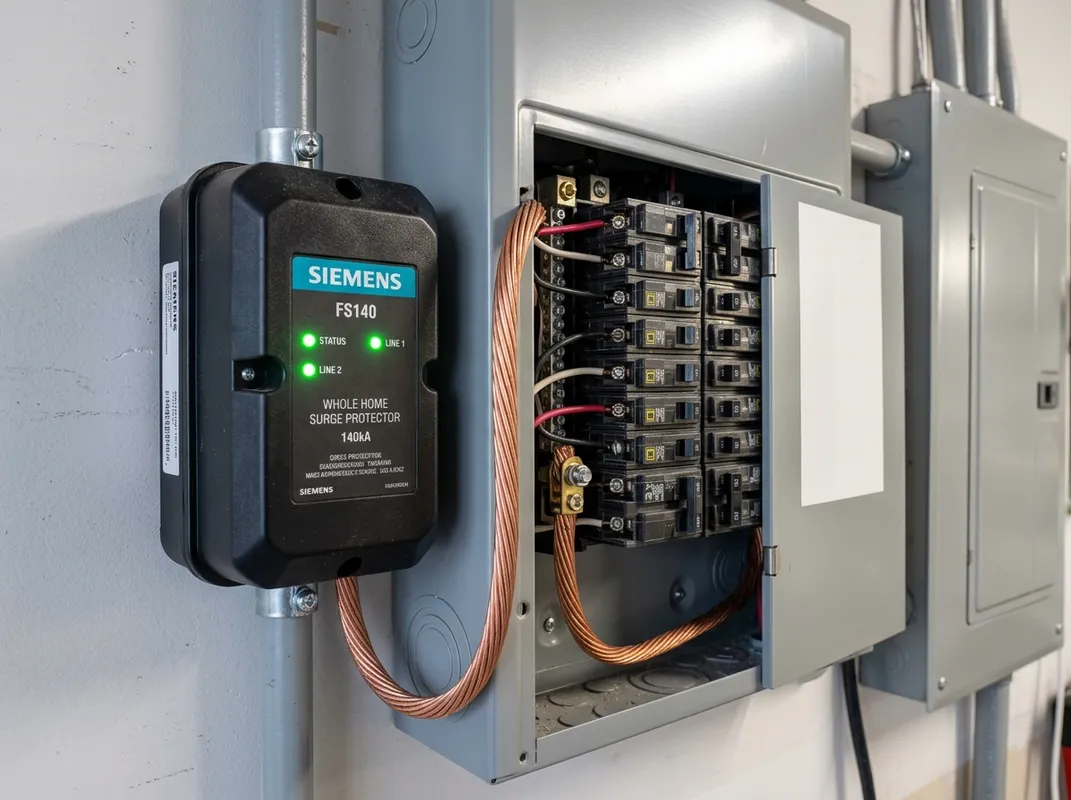
A whole house surge protector is a device installed at your main electrical panel that intercepts voltage spikes before they travel through your home's wiring to your appliances and electronics. It clamps excess voltage down to safe levels in nanoseconds — faster than any power strip can react.
Installation takes about two to three hours. A JLC Electrical Contractors LLC electrician mounts the surge protection device directly at your breaker panel, wires it to the main bus bars, and verifies the grounding system meets NJ code requirements. Proper grounding is critical — a surge protector without a solid ground path will not protect anything.
- Intercepts voltage spikes at the panel before they reach any outlet, appliance, or device in your home
- Protects high-value electronics (HVAC systems, smart home hubs, computers) that power strips cannot fully shield
- Works 24/7 with no user interaction — set it and forget it once installed
- Pairs with a standby generator to protect against both outages and the power surges that follow restoration
Protection Levels
Surge Protection Systems We Install
JLC Electrical Contractors LLC installs layered surge protection — from the panel to the individual circuit — based on what your home actually needs.
Type 1: Meter-Base Surge Protection
Installed at the electric meter or service entrance, before power even reaches your main panel. Type 1 devices handle the largest surges — direct or near-direct lightning strikes and major utility grid events. Especially valuable in Monmouth County where summer thunderstorms and coastal lightning activity are frequent.
- Meter-base surge protector (installed between meter and main panel)
- Service entrance surge device (mounted at the weatherhead or meter socket)
Type 2: Panel-Mount Surge Protection
Most CommonInstalled directly at your main breaker panel, Type 2 devices are the standard for residential whole house surge protection. They handle the most common surge sources: utility switching, transformer faults, nearby lightning strikes, and the voltage spike that occurs when JCP&L restores power after an outage.
- Eaton Whole House Surge Protector (CHSPT2ULTRA — 108kA surge capacity)
- Siemens FS140 (140kA capacity, compatible with most residential panels)
- Square D Surgebreaker Plus (panel-integrated, compact design)
- Generac-compatible surge protection (optimized for Generac generators)
Type 3: Point-of-Use Surge Protection
Installed at individual outlets or circuits to protect specific high-value equipment. Type 3 devices work as a second layer behind your whole house protector — catching any residual surge energy that makes it past the panel-level device.
- Dedicated surge-protected outlet installation (individual circuits)
- Hardwired surge strip for home theater or server rack
- HVAC-specific surge protector (protects compressor and control boards)
Layered Protection (Type 1 + 2 + 3)
Maximum ProtectionThe highest level of protection available for a residential home. A layered system combines meter-base, panel-mount, and point-of-use devices so that surges are reduced at each stage before reaching sensitive equipment. Recommended for homes with generators, home offices, smart home systems, or high-value electronics.
- Full-home layered protection package (Type 1 + Type 2 + Type 3)
- Generator + surge protection bundle (FREE with generator install)
What Level of Surge Protection Does Your Home Need?
A power strip at your desk is not the same as a panel-mount surge device rated for 108,000 amps. Mike will assess your home's electrical system, grounding quality, and the value of the equipment you are protecting to recommend the right level of coverage.
Book Your Free Surge Protection AssessmentLimited Time Offer
$500 Off Generator Installation
Includes FREE Whole House Surge Protector + FREE 1-Year Maintenance Plan
Every air-cooled whole house generator install by JLC Electrical Contractors LLC includes a FREE whole house surge protector at no additional cost. Generators create voltage fluctuations during power transfer events — pairing them with surge protection is standard JLC Electrical Contractors LLC practice.
Air-cooled whole house generator installs only. Mention this offer when scheduling.
Who Needs Whole House Surge Protection
Surge Protection Applications
If your home has electronics, appliances with circuit boards, or a standby generator, surge protection is not optional — it is a cost-of-ownership decision.
Generator Owners
When a generator kicks on and off during power transitions, it creates voltage fluctuations that can damage sensitive electronics. Pairing a whole house surge protector with your Generac system protects against both grid surges and transfer-related spikes.
Included FREE with JLC Electrical Contractors LLC generator installsCoastal and Storm-Prone Homes
Monmouth County averages 25 to 30 thunderstorm days per year, and homes along the Shore face higher lightning exposure than inland properties. A single nearby strike can send a 20,000+ volt surge through utility lines and into your home.
Smart Home and Connected Devices
Smart thermostats, security cameras, Wi-Fi mesh systems, motorized blinds, and voice assistants all run on sensitive microprocessors. A single surge can brick multiple devices simultaneously, and homeowner's insurance often does not cover electronics damage from power events.
Home Offices and Remote Work Setups
Computer equipment, NAS drives, monitors, and networking gear represent thousands of dollars in hardware and irreplaceable data. A surge that takes out a power supply can also destroy a hard drive.
Homes with High-Value HVAC Systems
Modern HVAC systems use variable-speed compressors and digital control boards that cost $1,500 to $3,000+ to replace. A surge that fries your HVAC control board in August means no AC until the part ships — which can take weeks during peak season.
New Construction and Major Renovations
If you are building a new home or gutting an existing one, adding whole house surge protection during construction costs less than retrofitting it later. JLC Electrical Contractors LLC integrates surge protection into new panel installations as a standard recommendation.
Compare Your Options
Whole House Surge Protector vs. Power Strip
| Feature | Whole House Protector | Power Strip |
|---|---|---|
| Protection Scope | Every outlet, circuit, and hardwired device in the home | Only the devices plugged into that strip |
| Surge Capacity | 50,000 to 140,000+ amps | 500 to 4,000 amps (most residential strips) |
| Hardwired Appliances | Yes — HVAC, water heater, oven, dryer, generator | No — only protects plug-in devices |
| Lightning-Grade Surges | Yes (with Type 1 or Type 2 device) | No — most strips fail under major surges |
| Lifespan | 5–10+ years depending on surge activity | Degrades with each surge, often fails silently |
| Installation | Licensed electrician at breaker panel | Plug into any outlet |
| Cost | $300–$800 installed | $20–$80 per strip |
Power strips protect individual devices from small surges but fail catastrophically against the large utility surges and lightning events common in Monmouth County. Whole house surge protection is the only way to defend your entire electrical system — including hardwired appliances that power strips cannot reach.
Long-Term Care
Surge Protector Maintenance
Whole house surge protectors are passive devices with no moving parts, but they do not last forever. Every surge they absorb degrades their internal components slightly, and eventually they need replacement.
Check the Indicator Light
Most panel-mount surge protectors have a green LED that confirms the device is active. If the light is off or red, the device has absorbed its maximum capacity and is no longer providing protection. Check monthly — it takes five seconds at your breaker panel.
Replace After a Major Surge Event
If your home takes a direct or near-direct lightning strike, or if JCP&L restores power after a prolonged outage with a noticeable voltage spike, have JLC Electrical Contractors LLC inspect your surge protector. Major events can exhaust a surge device in a single incident.
Grounding System Verification
A surge protector is only as effective as your home's grounding system. If you have an older home with original grounding rods, the ground path may have corroded or loosened over time. JLC Electrical Contractors LLC checks grounding integrity during installation and can re-verify it during any service call.
Planned Replacement Cycle
Even without a catastrophic event, surge protectors should be evaluated every 5 to 7 years. Internal metal oxide varistors (MOVs) degrade gradually with repeated small surges from normal utility activity.
Pair With Generator Maintenance
If you have both a standby generator and a whole house surge protector, schedule your surge protector check during your annual generator maintenance visit. One appointment covers both systems.
The JLC Electrical Contractors LLC Difference
Why JLC Electrical Contractors LLC for Surge Protection
Surge protection is a code and grounding problem as much as a product choice. The electrician's knowledge matters more than the device on the shelf.
Grounding Expertise for NJ Coastal Homes
Salt air and sandy soil along the Monmouth County coastline create grounding challenges that inland homes do not face. JLC Electrical Contractors LLC has installed surge protection and grounding systems across the Shore since 2007 and knows the conditions that compromise ground rod effectiveness.
Generator + Surge Protection Specialists
JLC Electrical Contractors LLC is a certified Generac distributor and installs more residential generators in Monmouth County than most competitors. Every generator install includes a FREE whole house surge protector because generators and surges go hand-in-hand.
Correct Installation, Not Just a Quick Wire
A surge protector bolted to the panel is only half the job. JLC Electrical Contractors LLC verifies your grounding electrode system, checks bus bar connections, and confirms the device is rated for your panel's voltage and amperage.
Honest Assessment of What You Need
Not every home needs layered Type 1 + Type 2 + Type 3 protection. Mike evaluates your home's risk profile — location, panel age, grounding quality, and what equipment you are protecting — and recommends only what makes sense.
“They were prompt, professional, efficient, and hardworking and completed my upgrade without unnecessary delays. I believe Mike is a very competent electrician and he takes pride in his work.”
Common Questions
Surge Protection FAQ
The most common sources are lightning strikes (direct and nearby), JCP&L utility switching and grid restoration after outages, large appliance cycling (AC compressors, well pumps), and downed trees or accidents that damage power lines. Monmouth County's coastal location and summer thunderstorm frequency make surge events more common here than in many inland NJ areas.
Consider what you are protecting. A modern home has $10,000 to $50,000+ in electronics, HVAC control boards, and smart devices that are all vulnerable to voltage spikes. A whole house surge protector costs $300 to $800 installed and lasts 5 to 10 years. One prevented surge event pays for the device multiple times over.
A whole house protector handles the large, dangerous surges that come from outside your home. Power strips or point-of-use devices add a second layer for sensitive equipment like computers and home theater systems. JLC Electrical Contractors LLC recommends both for maximum protection — the whole house device does the heavy lifting, and the point-of-use device catches residual energy.
Yes. Every air-cooled whole house generator install by JLC Electrical Contractors LLC includes a FREE whole house surge protector at no additional cost. Generators create voltage fluctuations during power transfer events, and pairing them with surge protection is standard JLC Electrical Contractors LLC practice because it protects your home during the exact moments the generator activates.
Typically 5 to 10 years depending on how many surge events it absorbs. Each surge degrades the internal components slightly. The indicator light on the device tells you whether it is still active. JLC Electrical Contractors LLC recommends checking the light monthly and scheduling a professional evaluation every 5 to 7 years.
In most cases, yes. JLC Electrical Contractors LLC installs surge protectors on panels from all major manufacturers — Square D, Siemens, Eaton, GE, and others. However, if your panel is severely outdated (Federal Pacific, Zinsco, or a fuse box), JLC Electrical Contractors LLC may recommend a panel upgrade first for safety and code compliance before adding surge protection.

Electrical Emergency?
Don't Risk It.
Our electricians are standing by 24 hours a day, 7 days a week. Sparking outlets, power outages, and electrical hazards can't wait.