Hardwired vs. Plug-In Level 2 EV Chargers: Which Is Better for Monmouth County, NJ Homes?
By JLC Electrical Contractors

Choosing between a hardwired and a plug-in Level 2 EV charger comes down to your home's existing electrical setup, not just personal preference. For homeowners across Wall Township and the wider Monmouth, Middlesex, and Ocean County area, the better option depends on whether a suitable 240-volt outlet already exists, how much charging output you actually need, and what New Jersey's permit rules require for the specific work involved. JLC Electrical Contractors installs EV chargers as part of its electrical services, along with panel upgrades and dedicated circuits, so this comparison focuses on the practical electrical factors that should guide your decision before you buy equipment.
Two Ways to Power the Same Charging Level
Both hardwired and plug-in setups can deliver residential Level 2 charging using 240-volt power. The difference is in the connection itself: a hardwired charger connects directly to your home's building wiring, while a plug-in charger connects through a compatible receptacle (Pacific Northwest National Laboratory).
This distinction matters because it is easy to confuse a plug-in Level 2 charger with basic 120-volt Level 1 charging, which is a much slower connection entirely. Both Level 2 methods described here use the same nominal voltage, just a different physical connection to your electrical system.
Circuit Capacity Determines Charging Speed, Not the Connection Type
A common misconception is that hardwiring is automatically faster than a plug-in setup. In reality, the available circuit capacity, charger configuration, and vehicle charging capability all affect the actual charging output.
The ChargePoint Home Flex installation guide illustrates this clearly: a 50-amp circuit supports 40-amp charging through either a hardwired or plug-in connection, but reaching 48-amp charging requires hardwiring on a 60-amp circuit.

This is because EV charging is treated as a continuous electrical load, and the circuit generally must be rated for at least 125% of the charger's continuous output (ChargePoint Home Flex Installation Guide).
These amperage examples apply to the ChargePoint Home Flex. Other charger models may have different installation configurations and output limits.
It is also worth noting that your vehicle plays a role. Actual charging time depends on the vehicle's onboard charging acceptance rate, the charger's output and configuration, battery size, and starting charge level. A higher-output charger will not necessarily charge every vehicle proportionally faster.
| Factor | Hardwired | Plug-In |
|---|---|---|
| Connection | Connects directly to building wiring | Connects through a compatible 240-volt receptacle |
| ChargePoint Home Flex output example | Supports 48-amp charging on a suitable 60-amp circuit | Supports up to 40-amp charging on a suitable 50-amp circuit |
| New installation needed | Typically required unless suitable wiring is already available | May reuse an existing compatible outlet and circuit after confirming their suitability |
| Portability | Fixed to its installed location | Removable, though reuse elsewhere depends on a compatible electrical supply |
Existing Outlet vs. New Installation: What Actually Drives Cost
ChargePoint recommends hardwiring specifically when no suitable 240-volt outlet already exists in the intended location.
From there, installed cost depends on the equipment chosen, the charger's location, your home's existing electrical capacity, any required upgrades, labor, and permitting (ChargePoint Home Resources; Pacific Northwest National Laboratory).
This is why the real comparison is not simply "plug-in is cheaper" versus "hardwired is more expensive." It is whether you have a genuinely usable existing circuit or whether new wiring, a subpanel, or a service upgrade is needed to support the charger safely.
An existing 240-volt receptacle is not automatically suitable just because the charger's plug fits. The wiring, breaker, receptacle condition and rating, dedicated-circuit requirements, and applicable electrical protection must also be evaluated for sustained EV charging.
JLC Electrical Contractors provides professional EV charger installation, including electrical capacity assessments, dedicated circuits, and panel upgrades. A professional assessment can help establish whether the existing electrical setup is suitable or new electrical work is needed.
For a closer look at the installation process itself, see professional home EV charger installation.
Compatibility, Outdoor Placement, and New Jersey Permit Rules
Equipment compatibility matters for plug-in setups in particular.
Receptacle selection and connection integrity affect reliability, and in some cases an external GFCI breaker can interact with a charger's internal protection and cause nuisance tripping.
ChargePoint recommends hardwiring where applicable local code requirements for GFCI protection create this compatibility concern. Any protection required by the adopted electrical code must still be provided, and electrical safety requirements should never be bypassed.
New Jersey also draws a distinction for permitting purposes between plugging equipment into an existing suitable receptacle and performing new electrical installation work.
The state's Department of Community Affairs explains that equipment connected to an appropriate existing receptacle generally does not require a construction permit solely because it is plugged in.
Installing a new outlet, upgrading circuit capacity, or adding a direct-wired charging circuit generally requires a permit and inspection (New Jersey DCA homeowner EV charging guide).
Certain EV charging installations qualify as minor work under New Jersey's Uniform Construction Code. This means that required work notification and permit procedures still apply, even though issuance of the permit may not be required before work begins.
In practice, plugging into an already suitable outlet is treated differently from adding new wiring. But it does not mean every charger purchase automatically requires a permit, or that all electrical work is exempt.
Your municipal construction office or licensed electrical contractor can confirm the requirements for your specific project.
If you are considering an outdoor location, both hardwired and plug-in charging setups may be possible when the equipment and connection method are rated for the environment.
A hardwired installation requires outdoor-rated equipment and wiring methods, while a plug-in option also needs a properly rated, weather-resistant receptacle and suitable weatherproof protection for its intended use.
For more on that topic, see outdoor EV charger placement considerations.
Which Option Fits Your Home?
Before choosing a connection method, it helps to know what your home's electrical system can actually support.
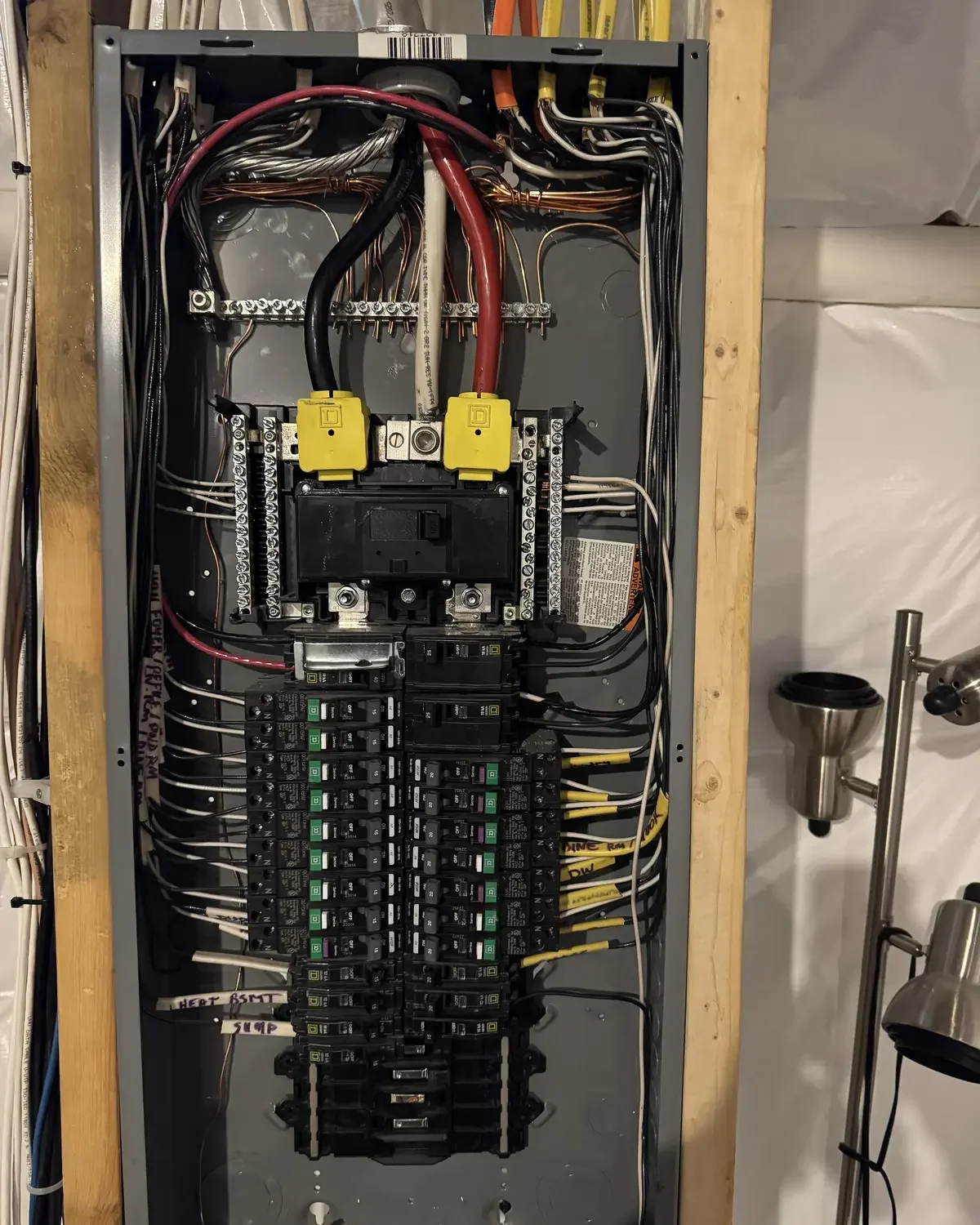
Available capacity may need a load calculation or a load study, and in some cases a properly designed load-control strategy can fit a charger within your existing capacity without a larger service upgrade.
Neither connection method automatically requires, or automatically avoids, a panel upgrade. It depends on your home's current setup and the output you want.
JLC Electrical Contractors provides professional Level 2 EV charger installation, panel-capacity assessments, permitting, and dedicated circuit work for major charger brands. Its team can evaluate the electrical requirements and help determine an appropriate installation approach.
Before choosing equipment:
- Confirm whether a suitable 240-volt outlet and circuit already exist in your preferred location.
- Match your target charging output to the circuit, breaker, wiring, and charger ratings.
- Account for your vehicle's charging acceptance rate when estimating charging time.
- Clarify whether your specific electrical work requires a permit, notification, and inspection.
- Determine whether your existing panel has sufficient capacity or whether circuit modifications, load management, or an upgrade will be necessary.
Get an Electrical Assessment Before You Buy
JLC Electrical Contractors is a licensed New Jersey electrical contractor (license 34EI01612000) based in Wall Township, serving homes throughout Monmouth, Middlesex, and Ocean Counties.
If you are weighing a hardwired versus plug-in Level 2 charger, call (732) 332-1100 to have your home's panel capacity and installation options evaluated before you commit to equipment.
Whether you have an existing 240-volt circuit or need a new dedicated circuit and panel upgrade, JLC Electrical Contractors can assess what your Wall Township or Monmouth County home actually needs.