Coastal Landscape Lighting: What Jersey Shore Homeowners Should Know
By JLC Electrical Contractors
Jersey Shore landscape lighting has to look good after dark and stand up to salt air, humidity, storms, and occasional coastal flooding. The short answer: choose durable low-voltage LED equipment, sealed outdoor connections, and placement that targets paths, steps, entries, decks, and architectural features, while giving extra thought to where transformers and electrical components sit on the property. JLC Electrical Contractors installs landscape lighting from its Wall Township office and works across Monmouth, Middlesex, and Ocean Counties, so shore conditions are part of every project we plan.
Why Shore Conditions Change the Lighting Conversation
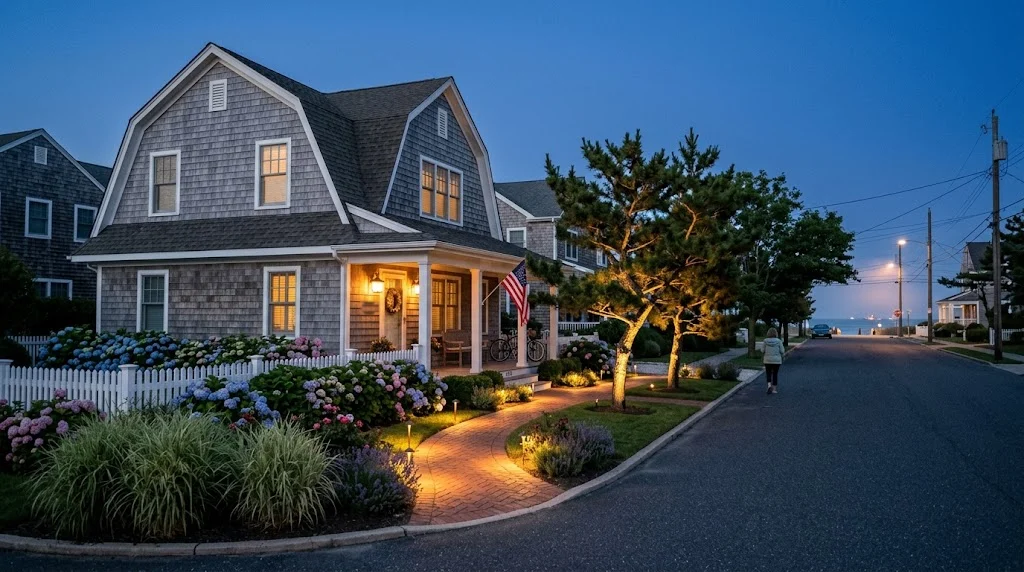
A few miles of distance from the ocean or bay can change how a landscape lighting system holds up over time. Sea spray carries salt that settles on exterior equipment, and that salt can speed up corrosion on metals like aluminum. Add in New Jersey's humidity and seasonal storms, and it's clear why shore properties deserve a different level of planning than a lighting job fifty miles inland.
Exposure varies by how close a property sits to the ocean or bay, prevailing wind patterns, and how sheltered the landscape is. For homes in Spring Lake and other shore communities, salt air and moisture belong in the design from the start.
Waterproof Isn't the Same as Corrosion Resistant
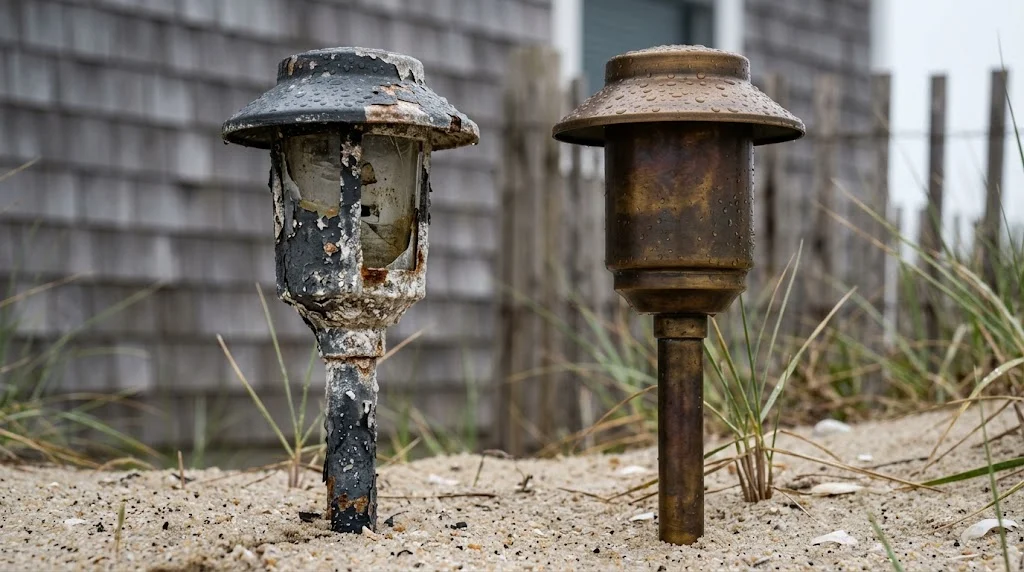
One of the most common mix-ups homeowners run into is assuming a fixture's water rating tells the whole durability story. An IP rating addresses dust and water intrusion into the fixture housing, but it says nothing about whether that fixture will resist salt-driven corrosion over the years. That comes down to the fixture body, the finish, and the fasteners holding it together, which is why JLC Electrical Contractors uses marine-grade materials such as stainless steel, brass, or copper housings.
Mismatched metals in a fixture and its hardware can also contribute to galvanic corrosion when things stay salty and damp, which is a bigger factor near the ocean or bay than most buying guides mention. Before settling on fixtures for a shore property, it's worth asking a few direct questions:
-
What is the fixture housing made of, and is the finish rated for coastal use?
-
Are the exposed fasteners and hardware a compatible metal, or could they drive galvanic corrosion?
-
Are the outdoor electrical connections fully sealed?
-
Where will the transformer sit, and is that location protected from standing water or storm surge?
Matching Low-Voltage LED Lighting to the Property
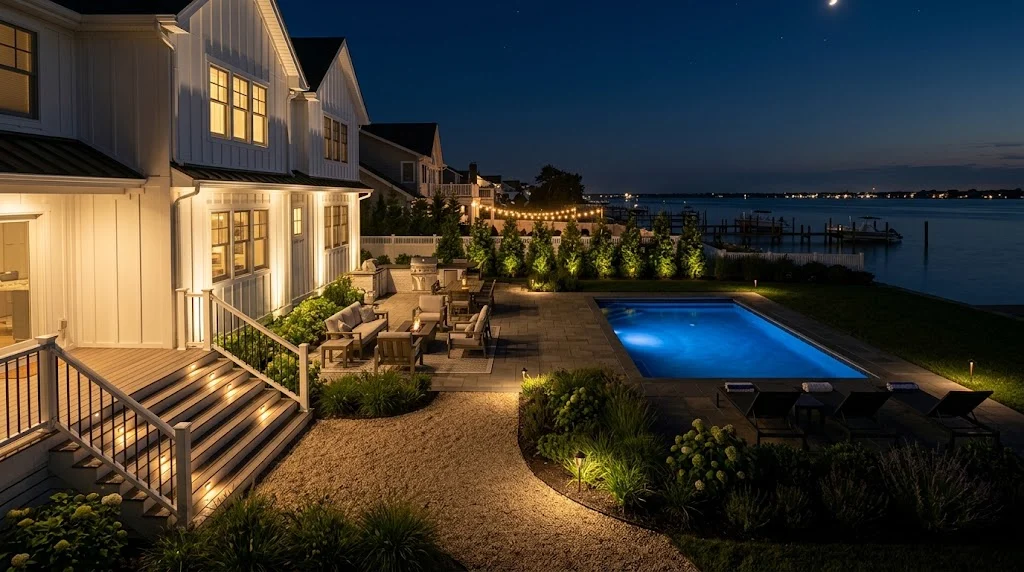
Low-voltage LED systems give homeowners the flexibility to light each of their home's features. JLC Electrical Contractors' landscape lighting work uses dedicated-transformer, low-voltage LED systems for applications that include walkways, steps, driveways, façade accents, porches, patios, decks, pools, and perimeter areas. Deciding which zones matter most on a given property, and lighting each one for how it's used, tends to produce a more useful result:
| Property Feature | Lighting Purpose |
|---|---|
| Walkways and steps | Safe footing and clear sightlines at night |
| Entries and porches | Welcoming, functional light at the door |
| Decks and patios | Usable outdoor living space after dark |
| Façade and architectural accents | Highlighting the home's design features |
| Pools and perimeter areas | Visibility and ambiance around the yard's edges |
For homes with a deck or patio built for entertaining, lighting is often one piece of a bigger outdoor electrical picture. An outdoor kitchen, for example, may need new circuits or a service upgrade, so it makes sense to plan the lighting and the kitchen's power together.
Placement, Flooding, and Equipment Location
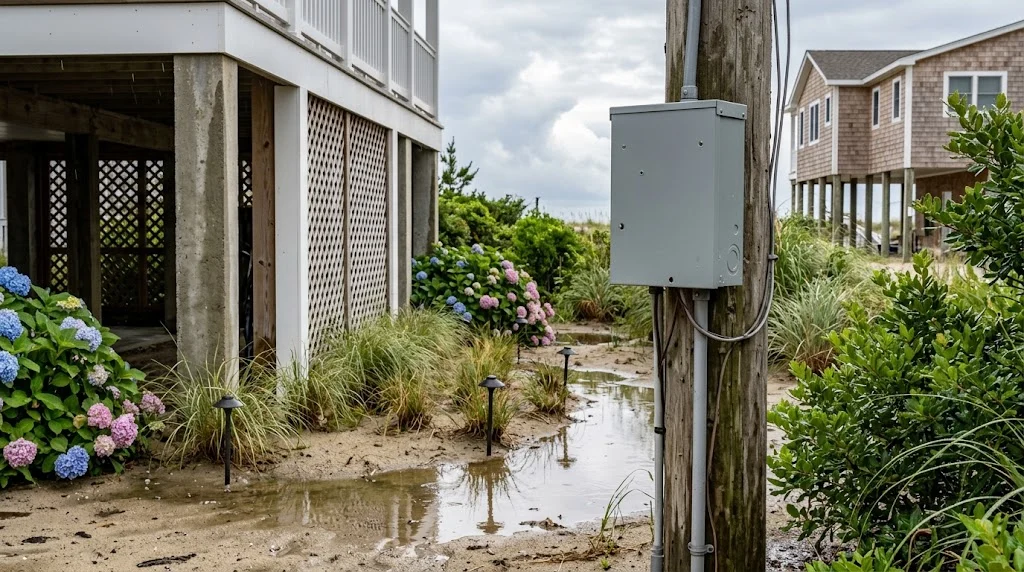
New Jersey's coastal flood-hazard guidance emphasizes keeping electrical and utility equipment above applicable flood elevations, and that guidance matters more for some shore properties than others. Flood exposure depends on the property's specific location and municipality, so transformer and electrical-component placement should be evaluated against how flood-prone a given site is before installation.
Humidity plays a role here too, even away from flood zones. Persistent moisture can wear on outdoor electrical components over time, which makes sealed connections just as important on a sheltered lot as on an oceanfront one.
Controls and Timing Worth Knowing About
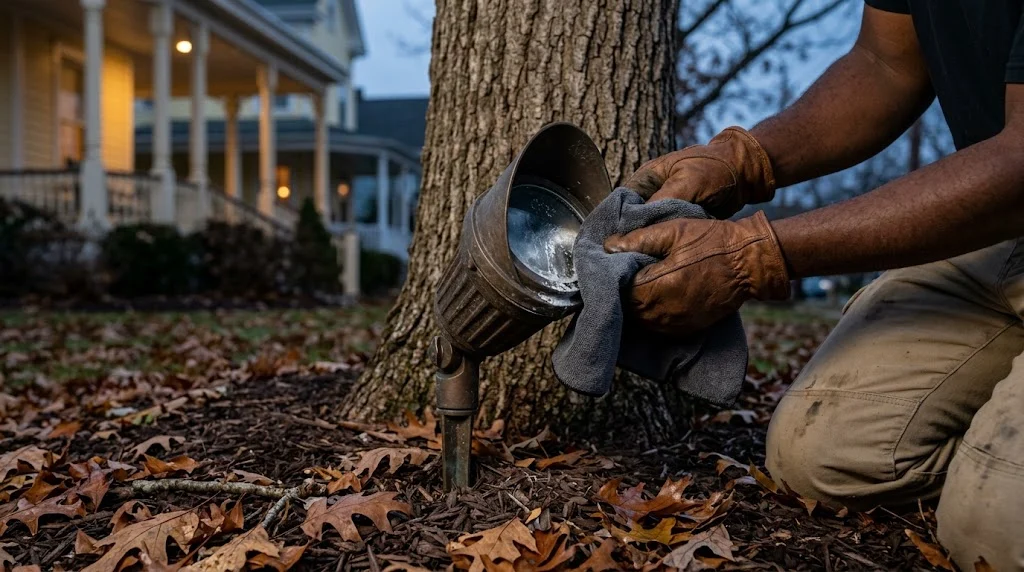
Exterior LED lighting can be paired with timers, daylight sensors, or programmable controls, and thoughtful aiming and shielding can cut down on unnecessary light spill. For shore homeowners, the goal is useful light where it's needed, without glare spilling onto a neighbor's property or out toward the water.
On timing: spring gives homeowners a natural window to evaluate a landscape lighting system before peak outdoor-living season arrives, while a check after a storm or in late fall can reveal loose fixtures, compromised seals, or salt buildup worth addressing.
Frequently Asked Questions
A waterproof outdoor fixture does not automatically hold up in salt air. A water-resistance rating covers dust and moisture intrusion into the fixture. Resistance to salt-driven corrosion depends on the housing material, finish, and fasteners.
A landscape lighting transformer at a shore property should be placed based on the site's flood exposure. For properties with meaningful flood risk, placement should be evaluated against local flood-hazard guidance and the property's specific conditions, since requirements vary by municipality.
The outdoor areas that benefit most from low-glare landscape lighting are walkways, steps, entries, and architectural accents. Targeted, well-aimed fixtures in these areas provide safe, usable light while limiting spill.
Plan Your Coastal Landscape Lighting with JLC Electrical Contractors
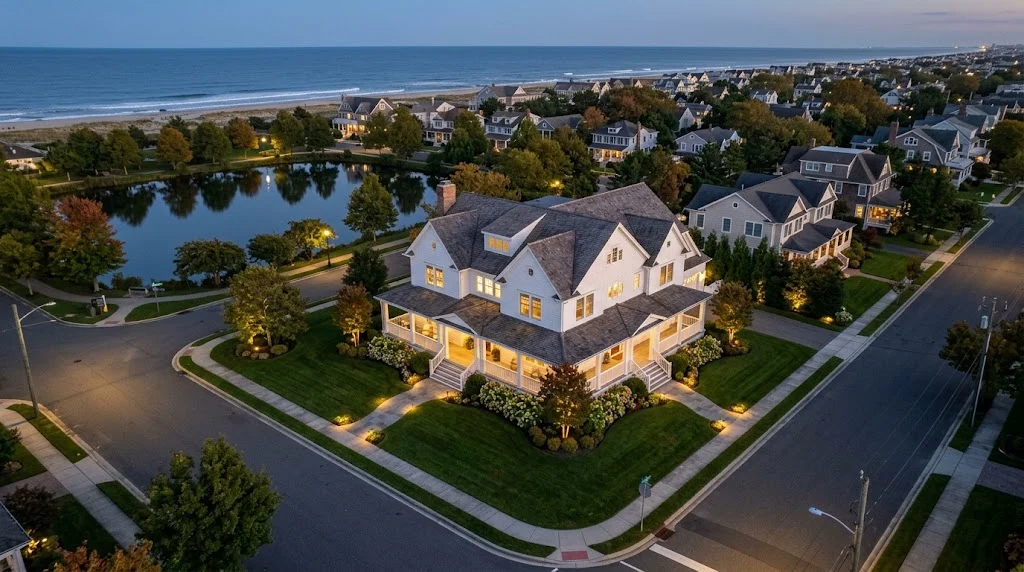
Salt air, humidity, and flood-prone spots all belong in a landscape lighting plan, and JLC Electrical Contractors installs low-voltage LED landscape lighting for homes across the Jersey Shore, including Spring Lake and surrounding Monmouth, Middlesex, and Ocean County communities. If you're weighing fixture options or thinking through where equipment should go on your property, call (732) 332-1100 to talk through your property's specific landscape lighting needs.